Wager Mage
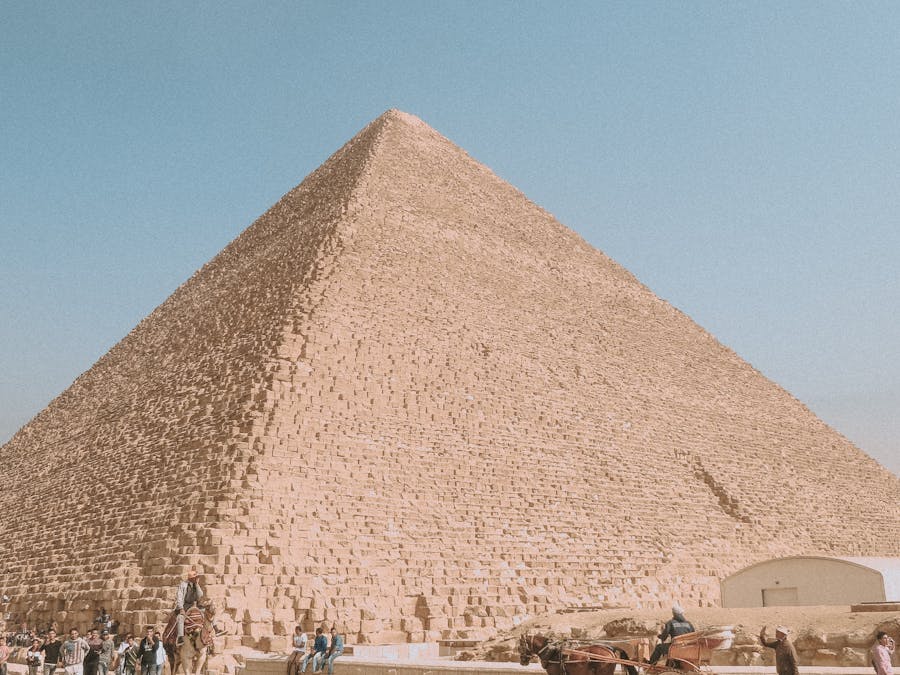
Photo by Mathias Reding Pexels Logo Photo: Mathias Reding

How the world will be in 2052?

The average global temperature will rise by more than two degrees, causing serious problems. The race for natural resources will be hard, the biocapacity of the world will be exploited more and more. The cities will become richer sources of raw materials for metal than the mineral deposits in nature (urban mining).

How many times should I putt per round?

Anywhere between 31-35 putts per round is acceptable good putting for the average golfer. 26-30 putts per round and you have now crossed over into...

Read More »
Who is the fastest tennis player in history?

However, John Isner holds the ATP's official record for the fastest serve at 253 km/h (157.2 mph). Reilly Opelka with a 233 km/h (144.8 mph) second...

Read More »

2052 – A Global Forecast for the Next Forty Years is a 2012 book describing trends in global development. It is written by Jørgen Randers and is a follow-up to The Limits to Growth, which in 1972 was the first worldwide report by the Club of Rome. It differs in three ways from the previous report. First, it does not describe an impending disaster scenario, but shows only trends. Secondly, it is to be read in the light of experience since 1972, namely, that all of humanity has responded to the report, but with a delay of 20 to 40 years. Thirdly, it offers not only future scenarios, it makes concrete proposals on how the individual should respond to emerging developments. Randers repeatedly points out that he does not want to predict specific events, only general trends.

Global forecast [ edit ]

The underlying logic of the prognosis

Randers's reflections are based on two central questions: "What will happen to the consumer over the next 40 years?" and "Under what conditions – in which social and natural environment – will this future consumption take place?" (p. 78). He uses computer models to make sure feedback effects are not overlooked.

Forecast on population and consumption

World population will decline from about 2040. The working population will peak around 2030. Productivity will grow, but encounter obstacles. The gross domestic product will grow, but more and more slowly. Investments – forced and voluntary – will increase. New costs will be incurred. Adaptation and disaster costs will rise rapidly. The state will become more involved. Consumption will stagnate and decline in some places.

Forecast on energy and CO 2

Energy efficiency will continue to increase. Energy demand is expected to rise, but not indefinitely. CO 2 emissions from energy consumption will peak in 2030. The average global temperature will rise by more than two degrees, causing serious problems.

Forecast on nutrition and ecological footprint

What is the rarest poker?

Salandit and Salazzle. At the time of writing, Salandit and Salazzle are two of the rarest Pokémon in the game. If you want to add their entries to...

Read More »
Why is bet suspended?

A suspended bet is a term used to describe when a betting market is suspended for some reason. The word suspended is most often used when a...

Read More »

The race for natural resources will be hard, the biocapacity of the world will be exploited more and more. The cities will become richer sources of raw materials for metal than the mineral deposits in nature (urban mining). In the same way that zoos have already become the last refuge for many endangered species, parks will assume this role for nature in general.

The non-physical future

Randers argues that the global gross domestic product will fail to increase as it has in the past because of population decline, general aging and declining productivity growth. The Internet will give rise to a completely new understanding of what is private and public. Knowledge will not be a scarce resource any more, but this will not lead to more rational decisions in most cases because knowledge on its own is not sufficient to change behavior when strong interests are involved. Therefore, it is likely that a "greenkeeping force" will be set up to enforce environmentally positive behavior, similar to the peacekeeping forces (blue berets) of today.[1]

What can be done? [ edit ]

Randers references UN recommendations[2] and gives 20 pieces of advice concerning individual behavior.

In short words he states:[3]

Concretely, in order to create a better world for our grandchildren, we should: Have fewer children, especially in the rich world. Reduce the ecological footprint, first by slowing the use of coal, oil and gas in the rich world. Construct a low-carbon energy system in the poor world, paid for by the rich. Create institutions that counter national short-termism. But most importantly, the coming crisis should be used to develop new goals for modern society. To remind us all that the purpose of society is to increase total life satisfaction, not primarily to have each person contribute to the economic gross domestic product.

What is a Parlay system?

A parlay in sports betting is when a bettor makes multiple wagers (at least two) and ties them together into the same bet. If any of the bets in...

Read More »
Where is car racing most popular?

From Italy to Japan, here are the top five countries for racing and car culture. Italy. If we are discussing countries that love racing, it would...

Read More »
What are 9 to 4 odds?

9-4 Betting Odds means that out of 13 possible outcomes, the 9/4 odds are that there will be 9 of one kind of outcome and 4 of another kind of...

Read More »
Do airlines prefer hard or soft luggage?

“Almost all U.S. airline crew members use soft-sided roll-aboard bags,” Patrick Smith, airline pilot, air travel blogger, and author, tells...

Read More »