Wager Mage
Photo by Patrick Case Pexels Logo Photo: Patrick Case

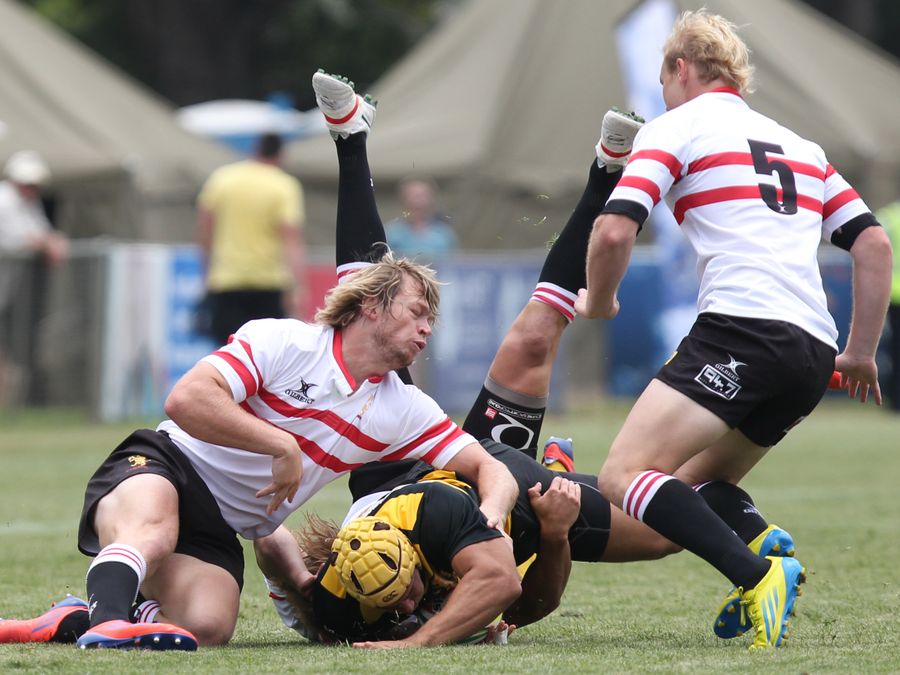
What is a 5'8 in rugby?

Five-eighth or Stand-off is one of the positions in a rugby league football team. Wearing jersey number 6, this player is one of the two half backs in a team, partnering the scrum-half. Sometimes known as the pivot or second receiver, in a traditional attacking 'back-line' (No.

en.wikipedia.org - Five-eighth - Wikipedia
How do you survive a martingale?

Therefore, in the Martingale trading strategy, after losing, you should double your trade and hope that you will win. If you lose again, you double...

Read More »
What do odds 5 6 mean?

What does 5 to 6 odds mean? 5-6 Betting Odds means that out of 11 possible outcomes, the 5/6 odds are that there will be 5 of one kind of outcome...

Read More »

Half back position in rugby league

This article is about the rugby league position. For the rugby union positions, see First five-eighths and Second five-eighths Five-eighth or Stand-off is one of the positions in a rugby league football team. Wearing jersey number 6, this player is one of the two half backs in a team, partnering the scrum-half.[1][2][3] Sometimes known as the pivot or second receiver,[4] in a traditional attacking 'back-line' (No. 1-7)[5] play, the five-eighth would receive the ball from the scrum half,[6] who is the first receiver of the ball from the dummy-half or hooker following a tackle. The role of the five-eighth is often to pass the ball away from the congested area around the tackle, further out along the 'back-line' to the outside backs, the centres and wingers, who have more space to run with it.[7][8] Furthermore, players in this position typically assume responsibility for kicking the ball for field position in general play.[9][10] The five-eighth is therefore considered one of the most important positions, often referred to as a 'play maker', assuming a decision-making role on the field.[11][12] Over time, however, as the game has evolved, the roles of the two halves have grown more aligned and difficult to distinguish.[13] Along with other key positions – fullback, hooker and scrum half – the five-eighth makes up what is known as a team's spine.[14] One book published in 1996 stated that in senior rugby league, the five-eighth and hooker handled the ball more often than any other positions.[15] The Rugby League International Federation's Laws of the Game state that the "Stand-off half or Five-eighth" is to be numbered 6.[16] However, traditionally players' jersey numbers have varied, and in the modern Super League, each squad's players are assigned individual numbers regardless of position.

Etymology [ edit ]

Traditionally in rugby football, there have always been two half-backs as well as scrums involving the forwards. Of the two half backs, the name "scrum half" was given to the one which was involved in the scrum by feeding the ball into it and the name "stand-off half" was given to the one which stood off to the side of the scrum.[17] In Britain, where rugby league originated, this terminology has been retained.[18] In Australian English, however, "five-eighth" is the term used for the number 6, to differentiate from the "half back" which is the name commonly given to the number 7.[19] In New Zealand, both terms appear to be used interchangeably.

Notable stand-offs [ edit ]

Five-eighths that feature in their respective nations' rugby league halls of fame are England's Roger Millward, Australia's Wally Lewis, Bob Fulton, Brett Kenny, Albert Rosenfeld and Vic Hey, and New Zealand's George Menzies. Rugby league's first known black player, Lucius Banks, played in the position for Hunslet R.L.F.C. in 1912-13.[20]

See also [ edit ]

Is it smart to hedge a parlay?

Parlays are a good example of hedging as well. If the first two legs of a three-leg parlay came in and the third would be for a big payout, hedge...

Read More »
How can I win a big bet?

Promoted Stories The favourite doesn't always win. ... Don't just stick to one bookmaker – shop around. ... The fewer selections, the better. ......

Read More »

Why is it called 5/8 rugby?

As the additional player stood between half-back and three-quarters, Duncan came up with the term five-eighths according to the fraction between them. The player at five-eighths, also known as the five-eighth, could take the ball back to the forwards or pass it on to the three-quarters.

Rugby union position

Second five-eighths, or sometimes second five-eighth,[1] is a name used in New Zealand to refer the rugby union position commonly known elsewhere as the inside centre or number 12.[2][3][4] It traditionally described a playmaking type of 12 with good passing and kicking skills as opposed to the strong hard runner and tackler in that position providing less game-management and attacking options. Some second five-eighths such as Sonny Bill Williams and Ma’a Nonu, however, combine aspects of both styles of play.[2][5]

Etymology [ edit ]

The 1903 All Black captain, Jimmy Duncan, is credited with coining the name five-eighths when he decided to take a player from the forwards to add to the backs. The backs at that time consisted of two half-backs, three three-quarters, and a full-back. As the additional player stood between half-back and three-quarters, Duncan came up with the term five-eighths according to the fraction between them.[2] The player at five-eighths, also known as the five-eighth,[1] could take the ball back to the forwards or pass it on to the three-quarters.[2] This backline innovation occurred before the split between rugby union and rugby league in Australia and New Zealand and the term is now commonly used for the five-eighth position in rugby league football.[6] As the game of rugby union evolved, the two half-back positions acquired separate functions. The outside half-back, now known as the outhalf or fly-half, became the first five-eighths in New Zealand under the two five-eighths system. The next player on his outside was called the second five-eighths.[2] The terms first-five and second-five are sometimes used as abbreviated versions of first five-eighths and second five-eighths, respectively.[7][8][9]

Notable second five-eighths [ edit ]

New Zealand All Blacks:

Australian Wallabies:

See also [ edit ]

References [ edit ]

Sources [ edit ]

Can your brain tell the future?

Many neuroscientists believe the human brain is a 'predictive machine'. Our brains are constantly predicting the future, from the short-term...

Read More »
Why can't I cash out on 1xbet?

The reasons why you cannot withdraw from your 1xbet betting account might be from your end. For example, if you violate 1xbet terms and conditions...

Read More »
What is the most difficult sport?

Boxing Degree of Difficulty: Sport Rankings SPORT END RANK Boxing 8.63 1 Ice Hockey 7.25 2 Football 5.38 3 33 more rows

Read More »
What to do if you are addicted to gambling?

Treatment for compulsive gambling may involve an outpatient program, inpatient program or a residential treatment program, depending on your needs...

Read More »