 Wager Mage
Wager Mage
Wager Mage
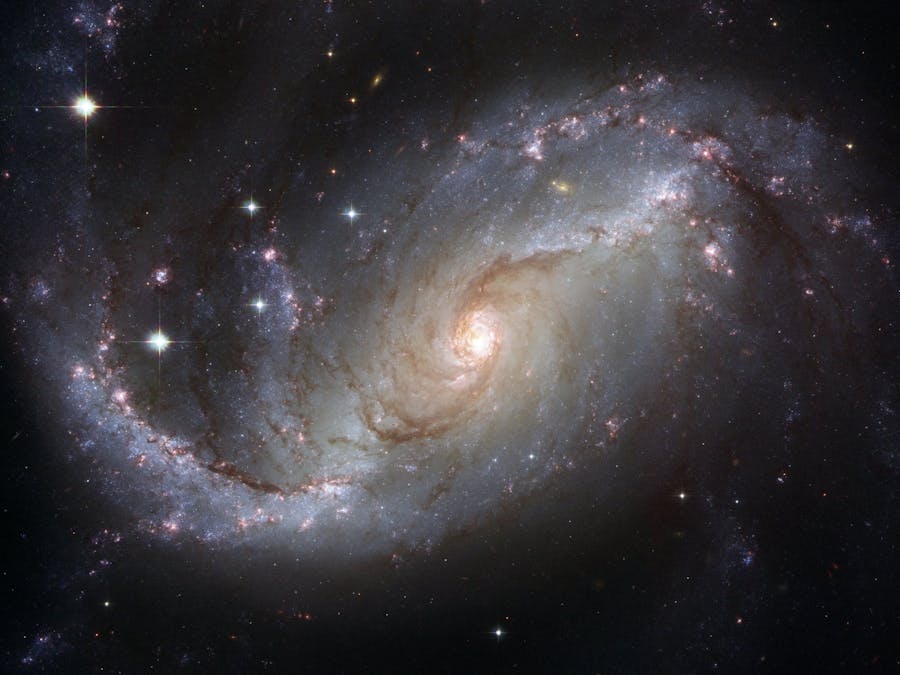
 Photo: Pixabay
Only 1-in-10,000 galaxies fall into the rarest category of all: ring galaxies. With a dense core consisting of old stars, and a circular or elliptical ring consisting of bright, blue, young stars, the first ring was only discovered in 1950: Hoag's object.

Licence on the provision of casinos In Goa, Sikkim, and Daman and Diu, casinos are allowed in five-star hotels for tourists. The laws that provide...
Read More »
Betting and Payout Limitations The minimum bet amount is one dollar ($1.00). DraftKings reserves the right to limit the maximum bet amount such...
Read More »When we look out into deep space, beyond the confines of the Milky Way, we find that the Universe isn’t quite so empty. Galaxies — small and large, near and far, in rich clusters and in near-total isolation — fill the abyss of space, with the Milky Way being just one of approximately two trillion such galaxies within the observable Universe. Galaxies are collections of normal matter, including plasmas, gas, dust, planets, and most prominently, stars. It’s through the examination of that starlight that we’ve learned the most about the physical properties of galaxies, and been able to reconstruct how they came to be. In general, there are four classes of galaxies that we see. Spirals, like the Milky Way, are the most common type of large galaxy in the Universe. Ellipticals, like M87, are the largest and most common type of galaxy in the rich, central regions of galaxy clusters. Irregular galaxies are a third ubiquitous type, usually distorted from a prior spiral or elliptical shape by gravitational interactions. But there’s a very rare type that’s striking and beautiful: ring galaxies. They make up only 1-in-10,000 of all the galaxies out there, with the first one, Hoag’s object, only discovered in 1950. After more than 70 years, we’ve finally figured out how the Universe makes them. The galaxy NGC 6028 possesses many features common to ring galaxies, with an inner population of older stars in a primarily elliptical configuration with a large, separated population of younger stars in a surrounding ring/halo. The stars are different ages and colors, but are found at the same redshift and distance from us as one another. (Credit: Sloan Digital Sky Survey) Visually, when you look at a ring galaxy, there’s a set of features that sticks out as unusual among galaxies. There’s a central core to the galaxy, relatively compact, that’s low in gas and consists primarily of older stars. There has been very little recent star-formation in that central region. Surrounding that galaxy, there’s a gap: a region of very low density, with almost no stars, no light, and very little gas or neutral matter. And then, beyond that, there’s another luminous population of stars. This population exists in a bright, luminous ring that surrounds the central core, but is much bluer in color than the core itself. This indicates that the stars within the ring formed much more recently, and are dominated by hot, short-lived, blue colored stars. In addition, when you look at where ring galaxies are located, they’re overwhelmingly located in what astronomers call “the field,” as opposed to the central locations of rich galaxy groups and clusters. Although this set of features might seem bizarre and unrelated, they’re all cosmic clues to the origins of these features. This two panel image shows ultraviolet (left) and visible light (right) images of the barred ring galaxy NGC 1291. The inner disk and bar persist in the center, where a population of older, cooler stars dominate. In the outer, fainter ring, young blue stars dominate, having formed relatively recently. (Credit: NASA/JPL-Caltech/SSC) There have been a number of possible explanations put forward for these ring galaxies that we’re certain are wrong, as they cannot account for the observed features when we examine them in detail. They aren’t planetary nebulae, which sometimes possess rings around them, as they’re definitively composed of stars, not of gas and other ejecta originating from a single, dying star. They aren’t made from a young galaxy getting stretched and ripped apart into a ring that comes to surround a separate, older, more massive galaxy that sits at the center. The ages of the stars in the outer rings and the shapes of the rings themselves show this cannot be the case, as the timescales and angular momentum constraints are in conflict with this possibility. And they aren’t examples of gravitational lensing, where a large, massive object stretches, distorts, and magnifies the background light from luminous objects along the same line-of-sight. Gravitational lenses do exist, and can create ring-like shapes under properly aligned conditions, but these ring galaxies all have the “ring” population and the “central” population occurring at the same redshift, ruling out the possibility of a gravitational lens. Whatever we’re looking at, we can be confident that these are all examples of a single galaxy with two distinct populations of stars: and old one in the central region, and a young one in the ring region. This object isn’t a single ring galaxy, but rather two galaxies at very different distances from one another: a nearby red galaxy and a more distant blue galaxy. They’re simply along the same line of sight, and the background galaxy is getting gravitationally lensed by the foreground galaxy. The result is a near-perfect ring, which would be known as an Einstein ring if it made a full 360 degree circle. It is visually stunning, and showcases what types of magnification and stretching a near-perfect lens geometry can create. (Credit: ESA/Hubble & NASA) Fortunately, we have a number of examples of these ring galaxies at present, rather than just a single example. By examining their various features, we can put together some of the puzzle pieces, and attempt to assemble a coherent understanding of how these objects form, and explain why they appear with the features and properties that we see. In April of every year, NASA and the Space Telescope Science Institute always release an anniversary image from Hubble, commemorating its 1990 launch on April 24. Although 2022’s image, celebrating Hubble’s 32nd birthday, is “merely” a tightly-knit galaxy group, the image released for Hubble’s 14th anniversary, back in 2004, provides a series of major clues. Shown below, galaxy AM 0644-741 reveals a ring that isn’t in a perfectly circular shape, but rather makes a sort-of elongated ellipsoid. In theory, this could either be because there’s a projection effect, and we’re seeing a circular feature as though it’s inclined to us, or because whatever occurred to form the outer ring happened in an asymmetric fashion. As it turns out, both explanations have merit for this one object, but other features are worth pointing out as well.

America has been considered as a gaming nation for a very long time. However, America is not the world's biggest gambler as many would think. ......
Read More »
Top Known Individual Holders Satoshi Nakamoto (~1.1 million BTC) ... The Winklevoss Twins (70,000 BTC) ... Tim Draper (29,000+ BTC) ... Michael...
Read More »This ellipsoidal ring galaxy, unremarkably named AM 0644-741, consists of a nucleus of old stars, approximately a third the size of the Milky Way, surrounded by a large ring of hot, young, blue stars approximately 130,000 light-years across. (Credit: NASA, ESA, and The Hubble Heritage Team (AURA/STScI)) First off, at a distance of only 300 million light-years, it’s relatively easy to resolve a number of important properties. The long axis of the blue-colored ring feature is around 130,000 light-years, making it comparable in size to the Milky Way, while the central, white/yellow-colored component is much smaller at only ~50,000 light-years. Second, there are dusty features seen silhouetted against the large ringed feature, which shows that not only is there “fuel” remaining to supply gas for continued star-formation, but indicate that there are unequal regions of density inside. Many of the darkest patches are regions which should form new stars moving ahead millions of years into the future. Third, there are pinkish regions littering the blue ring, which indicate the presence of ionized hydrogen: a typical feature of new star-forming regions where stars are actively being born right now. And finally, if we look at a wider-field view than the one captured by Hubble, we can even find the culprit: an intruder galaxy that apparently “punched through” what’s now a ring galaxy. In other words, this ring feature didn’t arise out of nowhere, but was caused by an interloper that led to its formation quite recently. This X-ray/optical composite image shows the ring galaxy AM 0644-741 along with a wide-field view of its surroundings. Below and to the left of this ring galaxy is a gas-poor ellipsoidal galaxy that may have punched through the ringed galaxy a few hundred million years earlier. The subsequent formation and evolution of a ring of new stars would be expected from the propagation of gas away from the center, like ripples in a pond. (Credit: X-ray: NASA/CXC/INAF/A. Wolter et al; Optical: NASA/STScI) How would this occur? Inside pretty much every spiral galaxy, even in modern times, there are copious reservoirs of gas. Gas gets stripped and depleted, primarily inside rich galaxy clusters, leading to that we call “red and dead” galaxies. Whenever new stars are formed, those new stars span the full gamut of colors and masses: from hot, blue, and heavy to cool, red, and light. However, the hottest, bluest, most massive stars burn through their fuel the fastest, so they’re the first to die. As a stellar population ages, it goes from blue to white to yellow to orange to red, and the longer it’s been since its last star-formation episode, the redder it is. If there’s no gas left to form new stars, it’s not just red, it’s also “dead,” at least in an astronomical sense. This is why, we think, we primarily find ring galaxies in the field, rather than in clusters. We need a gas-rich spiral galaxy to start with, and then when an interloping galaxy passes through its center, that collision creates outward-moving ripples in the gas, which trigger star formation and create the notorious ring-like shape. The Cartwheel galaxy, shown at right, is a stunning example of an imperfect ring galaxy, where a central nucleus of old stars and a bright ring of young stars are connected by a thin bridge of gas and stars throughout it. The cause of this ring, an interloping galaxy that smashed through the Cartwheel, is at the top left of the image, itself forming new stars as a result of the interaction. (Credit: ESA/Hubble & NASA) Another example of a ring galaxy, and one that’s clearly in a less-fully-evolved state, is the Cartwheel galaxy, shown above. On the right, you can not only see the dense, older core of a pre-existing gas-rich spiral galaxy surrounded by a bright blue ring of hot, young stars, but also a series of filaments between the core and the ring. Those filaments themselves are dotted with blue and white stars, although of a much lower brightness than either the main core or the ring itself.

UMBC is the only No. 16 seed to ever beat a No. 1 seed since the field expanded to 64 teams in 1985. Entering the 2022 tournament, No. Mar 17, 2022
Read More »
However, the answer is no. Children under the age of 18 are not allowed in a betting shop under any circumstances. Today we're going to explain why...
Read More »
Is vigilantism legal in the United States? In a word or two - absolutely not. With the recent activity and events in this past presidential...
Read More »
However, other individuals need to be careful, as gambling as a leisure activity can quickly develop into a compulsive disorder. ... These symptoms...
Read More »
First, click on the deposit on the 1xBet homepage and select bank cards (VISA or MasterCard) as your preferred deposit method. Next, fill in your...
Read More »
Betway comes with the best and most secure technology among international betting brands. Betway comes with a wide range of sports and a variety of...
Read More » Promotion
 Promotion
 Promotion
 Promotion