Wager Mage
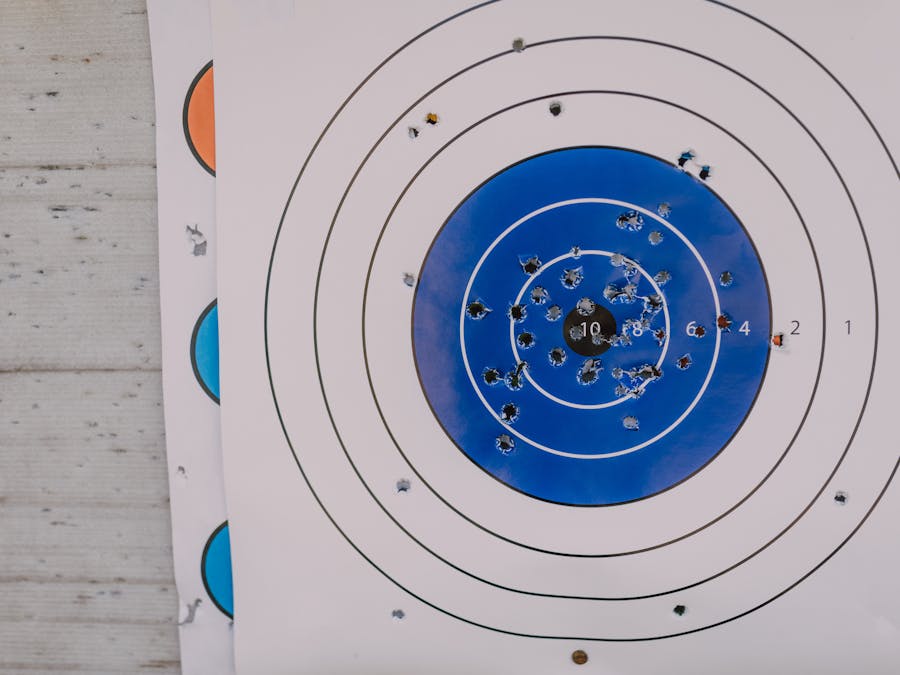
Photo by RODNAE Productions Pexels Logo Photo: RODNAE Productions

What's harder 9 darter or 147?

World Snooker Champion Mark Williams is also extremely proficient with a set of darts but believes a 147 is much harder, having gone close to a nine-darter with efforts of 'six or seven'. A similar survey of current and ex-dart professionals produced an equally lop-sided view in favour of the nine-darter.

What app gives you all sports?

FuboTV is a great option for any cord-cutting sports fans. For the national sports events, there's CBS, FOX, Golf Channel, NBA TV, NBC, NFL...

Read More »
What is a lifelong sport?

Lifetime sports are those you can play for your whole life. Finding a sport that you enjoy is one of the keys to exercise adherence—otherwise known...

Read More »

Who’s the greatest of all time? A question asked in relation to many sports over the years. Ali or Tyson? Tiger or Nicklaus? Messi or Ronaldo? These are debates that continue year on year, often without any definitive answer.

As official data partners to both the Professional Darts Corporation and World Snooker, Sportradar is well positioned to try answer another perennial talking point – is it harder to score a perfect nine-dart leg or a maximum 147 break?

Ask this question in any snooker club and you’ll often get a significant leaning towards the maximum break and, unsurprisingly, the opposite response among darts players. Many of the world’s top snooker players will also opt for the maximum break. World Snooker Champion Mark Williams is also extremely proficient with a set of darts but believes a 147 is much harder, having gone close to a nine-darter with efforts of ‘six or seven’. A similar survey of current and ex-dart professionals produced an equally lop-sided view in favour of the nine-darter. According to their own social media posts, Gerwyn Price has a highest break of 108 and Joe Cullen has made three century breaks including a highest of 118. Snooker’s world number one Mark Selby is in no doubt as to the tougher feat, commenting: “Thirty-six shots against nine. Anyone can hit a treble 20 but not pot a red and finish in a good position for the next black.” As anyone who has ever played snooker will know, potting 36 consecutive balls is hard enough, but to achieve a maximum break a player needs to ensure each red is followed by one particular ball, the black, of all those currently remaining on the table. Once they have repeated this fifteen times they then need to pot the six remaining colours in a particular order. The combination of speed, control, ball position and the use of angles required makes for quite the task. Throwing nine consecutive darts into an area of approximately 10mm x 35mm from around eight feet away may, at first, seem easier than a maximum break. It’s only nine darts against 36 pots! Other than requiring that the ninth dart is a double or bullseye, there is no fixed order of scoring required and there is an error range of nearly 2cm left or right of centre. There may only be six options for the all-important ninth dart but there are 3,944 different ways to get to that point.

Bullseye finish: 2,296 possible combinations

Who scored 3 hat-trick?

Cristiano Ronaldo has scored three hat-tricks; in January 2008, in March 2022, and in April 2022. Israeli midfielder Yossi Benayoun became the...

Read More »
Is Bitcoin losing value?

It is uncertainty over the future of bitcoin which has caused prices to crash. In June 2022, it plummeted below $18,000. It was still below $20,000...

Read More »

Double 20: 672

Double 18: 792

Double 17: 56

Double 15: 120

Double 12: 8

Performing at a world-class level in both sports relies on a repetition of action amid the pressure of distractions such as crowd noise, particularly in darts. Conversely, the total silence and sense of anticipation during a 147 break can affect a player considerably when needing to pot the final couple of balls for a considerable prize bonus. Just ask Thai snooker player, Thepchaiya Un-Nooh, who in 2016 missed the final black twice in the space of four months! The first official 147 in a professional event was in January 1982 by Steve Davis. April 1983 saw the first in a World Championship by Cliff Thorburn and it took until December 2013 for Mark Selby to record the hundredth maximum. Since then the frequency has gone through the roof with nearly fifty scored in the five years since. The first televised nine-darter was by John Lowe in October 1984 with Paul Lim recording the first in a World Championship in January 1990. Sportradar have been recording official PDC data since the sport divided in 1992 and there have been 265 nine-dart finishes recorded in approximately 1000 PDC tournaments during that period. This year has seen 10 maximum breaks in World Snooker events including three separate occasions where two maximums have been scored in the same tournament. At the English Open in October there were two in the 732 frames played in the tournament (one in 366). Mark Allen recently played a charity 24-hour snooker event that involved just over 100 frames. Allen’s achievement in hitting five maximums over those 24 hours at a rate of one in 20 is well above average, but not under competition pressure. It is very doubtful that a darts professional could achieve a nine-dart leg given only 20 attempts even in practice or exhibition mode. The increase in maximum-break frequency from decade to decade begs the question regarding players improving or the game getting easier? A progression from eight in the 1980s, 26 in the 1990s, 35 in the 2000s to over 70 since 2010. Instinct says that it is a combination of both – an increase in the number of tournaments played alongside improved, consistent playing environments. In the World Snooker Championship, there have been ten maximum breaks in 23,808 frames. A rate of one maximum every 2381 frames (one in 124 matches). The PDC World Darts Championship has had nine perfect legs in 25,982 legs and 1319 matches. A slightly lower rate of one in every 2887 legs (coincidentally one in 147 matches.) At the highest level, the numbers are not too far apart. It would only take three perfect legs over the next two World Championships to make them almost equal on frequency.

Can you predict the lottery?

In conclusion, there is no proven way to really predict lottery numbers with any certainty, but there are systems and strategies that some players...

Read More »
Can the average golfer break 80?

Only about 2 percent of all golfers ever break 80, which generally is considered the Holy Grail of scoring. To legitimately break 80 — no improved...

Read More »

At an overall professional level, the PDC have 265 recorded nine-darters over 25 years in approximately 111,000 matches. A frequency of one every 419 matches. A comparison with all the snooker matches in the Sportradar snooker database gives a frequency of 1 in 247 matches and one in 1587 frames for the maximum break. In comparison to snooker, a darts player only gets one opportunity in every leg to hit a nine-darter, any mistake means the chance has gone and the process starts over in the next leg whereas a snooker player may get more than one chance during a frame before the first ball is potted. They could make multiple mistakes, miss a few pots before potting the first red, as long as all the balls are still on the table they still have that opportunity to make the 147. There are an infinite number of ball positions available for every single snooker shot after the break-off shot. Some maximum attempts will be much more difficult than others if, for example, there are balls positioned tight to the cushion, very tightly packed together, or at the ‘wrong’ end of the table. Another factor to be considered is that every dart thrown is totally independent of your opponent whereas in snooker the initial opportunity is dependent on a situation created by an opposing player. The ‘field of play’ does not change considerably in darts (apart from having one or two darts reducing the target area) whereas every frame of snooker is different with almost infinite combinations for ball positions before and after every shot. Nine-darters have also seen a considerable increase in frequency over the years just like maximum breaks. Factors that could be influencing this could be the number of tournaments and changes in the width and style of wires on current dartboards. Or it could be that players are getting better! Whichever side of the fence you come down on, Sportradar will continue to monitor proceedings dart by dart and shot by shot.

Read More Here

What does a $10 3 team parlay pay?

Using standard -110 odds on each leg of the parlay, a fair three team parlay payout is 6.96 times whatever your wager amount was. If you bet $10 on...

Read More »
Why do poker players wear hoodies?

Many poker players will sit at the same table for hours at a time, so it is important to be as comfortable as possible. Not only that, but a hoodie...

Read More »
What to do if the FBI is looking for you?

If you are unsure whether you have committed a federal crime, this is even more reason not to speak with FBI agents when they show up at your door....

Read More »
What does +3 spread mean in gambling?

The point spread is the expected final score difference between two teams. It is represented as both a negative and positive number; if the spread...

Read More »